Discovering the Intricacies of Crystals in Rocks
Intro
Crystals within rocks represent a remarkable intersection of beauty and complexity found in nature. These stunning formations, often characterized by their geometric shapes and vibrant colors, capture the imagination of collectors and enthusiasts alike. But beyond their aesthetic appeal lies a deeper significance that touches on geology, mineralogy, and even cultural aspects of human life. As one dives into this visual journey, it's essential to understand the underlying principles governing the formation of these crystals, the processes involved, and what they can reveal about our planet.
Topic Overview
Definition of Crystals and Rocks
Crystals can be defined as solid materials whose atoms are arranged in highly ordered patterns, known as crystal lattices. When we talk about rocks, we refer to solid aggregates composed of one or more minerals. Often, these minerals crystallize under specific temperature and pressure conditions, leading to unique formations found in various types of rocks. The beauty of crystals can transform the ordinary into the extraordinary, giving rock formations an enchanting allure.
Brief History and Significance
The fascination with crystals dates back to ancient civilizations. For instance, the Egyptians valued quartz and lapis lazuli not only for their stunning appearance but also for their supposed mystical properties. In the realm of geology, the study of crystals provides insights into the processes that shape the Earth. They act as indicators of environmental conditions during their formation. By examining crystals, geologists can decipher a rock's history, offering clues to volcanic activity, pressure changes, and even the age of the rock itself. Understanding these aspects can serve as a window into our planet's past, making the study of crystals a significant pursuit for both scientists and collectors.
Identification and Classification
How to Categorize Crystals in Rocks
When engaging with crystals, it’s helpful to know how to categorize them. Here are some common classifications:
- Mineral composition: Crystals may be primarily composed of quartz, feldspar, or calcite, each exhibiting distinct properties.
- Color and luster: The appearance can drastically vary. Some crystals reflect light beautifully, while others may have a matte finish.
- Formation process: Crystals form in various settings, from igneous rocks where they crystallize from molten magma to sedimentary environments where they grow in sediments.
Tips for Identifying Key Features
Identifying crystals requires a careful eye and some knowledge. Here are some tips:
- Examine the color: The color can provide clues about the mineral identity, though some minerals can be similar.
- Look for symmetry: Crystals often have symmetrical shapes, which can help in their classification.
- Test the hardness: Using the Mohs scale, you can determine how resistant a crystal is to scratching, which is essential for identification.
"Crystals within rocks are nature's art, crafted over millions of years, telling stories of the Earth's geological past."
By understanding the fundamentals of classification and identification, collectors can enhance their experience, deepening the appreciation of these remarkable natural pieces. As we proceed in this exploration, we will delve into the fascinating processes that produce these crystals and their implications for collectors and enthusiasts.
The Nature of Crystals in Rocks
Understanding the nature of crystals in rocks is quite fundamental to appreciating the beauty and complexity of geological formations. Crystals are not merely attractive pieces of nature; they are vital indicators of the conditions under which they formed. The character of a crystal can relay a story about its geological environment. By knowing how to read these stories, collectors and enthusiasts can gain deeper insights into earth sciences and the very processes that shaped our planet.
Defining Crystals
At its core, a crystal is a solid material with a highly ordered arrangement of atoms, ions, or molecules. This order results in a unique lattice structure that is different from non-crystalline solids like glass or resin. When we talk about crystals, we often refer to beautiful and symmetric formations, which can be found in a plethora of rocks. Interestingly, crystals can be small, like the sparkling grains within a granite rock, or large, such as quartz amethyst clusters, showcasing a variety of shapes and colors.
Crystals are primarily defined by their internal structure, which reflects the symmetry and symmetry operations that characterize them. They can be classified based on symmetrical properties, and this classification leads to several categories including cubic, tetragonal, hexagonal, rhombic, monoclinic, and triclinic structures. This intricate classification is not just for academic sake; it helps enthusiasts identify crystals more accurately, attributing to their value and scientific significance.
Crystallization Processes
Crystallization is the process through which crystals form from a solution, melt, or vapor. This is a captivating process that occurs under a variety of conditions. For instance, when magma cools slowly beneath the Earth's surface, minerals crystallize, forming igneous rocks rich in crystals like quartz or feldspar. On the other hand, if the cooling occurs quickly, as often happens with lava, the crystals may be small or even microscopic, as seen in basalt.
"The formation of crystals encapsulates the dance between temperature, pressure, and the chemical constituents present during their birth."
Furthermore, there are other processes to consider; for instance, evaporation of water can lead to crystallization directly from mineral-rich brines, forming beautiful formations of halite (rock salt) or gypsum. Each method of crystallization tells its tale. Collectors should be aware how a crystal's formation can reveal valuable information about its provenance and geological history.
Types of Crystalline Structures
The diverseness of crystalline structures is indeed a fascinating topic. Each structure plays a crucial role in defining the characteristics and properties of the mineral associated with it. Here’s a brief overview of significant types:
- Cubic: Characterized by angles of 90 degrees, these crystals include well-known gems like diamonds and halite.
- Hexagonal: These formations include quartz, which is commonly found in many types of rocks and possesses strong optical properties.
- Tetragonal: This type includes zircon, which can display a variety of colors and luster.
- Orthorhombic: Minerals like olivine belong to this group, often found in igneous rocks.
- Monoclinic and Triclinic: These structures are less common and often seen in specific mineral groups, showcasing lower symmetry.
Understanding these structures is essential, particularly in collecting, as it aids in identifying the mineral and appreciating its intrinsic value. Collectors often have a distinct interest in not just the aesthetics but the scientific classification as well.
In summary, the nature of crystals within rocks presents an intricate interplay of beauty and science. They encapsulate a vast history shaped by geological forces and provide significant insights for both collectors and geologists alike.
Types of Crystals Found in Rocks
Exploring the world of crystals is akin to unearthing nature's very own artistry, molded through time and various geological processes. In this section, we delve into the types of crystals prevalent within rocks, highlighting not just their beauty but also their significance in both geology and for enthusiasts alike. Each crystal type has unique attributes and applications, forming a crucial part of the narrative that celebrates the intricate symbiosis between minerals and their environments.
Quartz: The Ubiquitous Gem
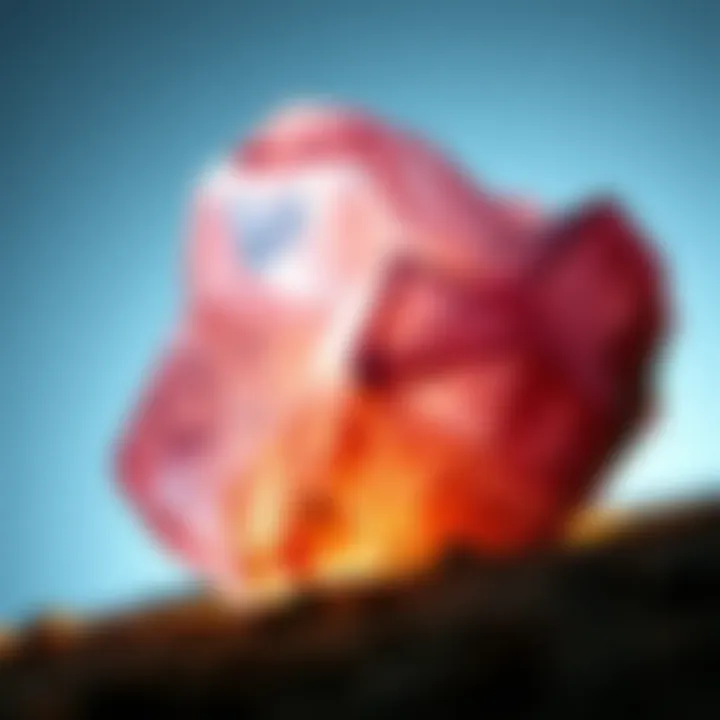
Quartz stands as one of the most commonly encountered crystals found in rocks. Its crystalline structure is formed primarily from silicon and oxygen and is known for its remarkable variety of colors—ranging from clear to pink, purple, and even smoky hues. This mineral's impressive durability and resistance to weathering make it an invaluable component in many stone types, including granite.
The beauty of quartz lies not merely in its appearance but in its multifaceted roles. From watchmaking to technological applications, quartz is a significant player. Moreover, quartz crystals are often sought after by collectors and enthusiasts. The simple act of holding a quartz specimen can evoke a deep sense of connection to the ancient geological processes that birthed it.
Feldspar Variants
Feldspar, the unsung hero among crystals, is present in an array of rocks, notably granite. This family of minerals includes several variants, notably orthoclase, plagioclase, and microcline. Each variant carries distinctive features, contributing differently to the overall geology of an area. For instance, orthoclase shines with its pinkish hues while plagioclase displays a striking range from white to grey, often with a sheen that catches the eye.
In terms of geological significance, feldspar helps to characterize the composition of igneous rocks, thereby offering insight into the conditions under which they formed. Collectors too hold a fascination for feldspar, often detailed in their quest to distinguish the subtle differences in hue and texture across its various forms.
"Feldspar forms the foundation on which many geological stories are built—it's often the glue that holds the narrative together."
Micas and Their Characteristics
Micas are special, offering a unique slate of characteristics that set them apart from other crystals. Typically formed in metamorphic rocks, they can be found in two main varieties: muscovite and biotite. Muscovite is often colorless or slightly tinted and exhibits superb clarity. Biotite, conversely, asserts its presence with a dark brown to black appearance.
These minerals are particularly known for their sheet-like structure which makes them perfect for easy separation into thin, flexible sheets. This property has made micas valuable not just in geology but also in other fields such as electronics. For collectors, having a specimen of mica can display an appreciation for both form and function. Understanding how micas form gives insights into the complex interactions under extreme conditions of temperature and pressure.
Other Notable Crystals
While quartz, feldspar, and mica often steal the spotlight, other crystals also play important roles in the rock community. For instance, calcite—with its distinctive clear or white crystals—holds a prominent spot in sedimentary environments. It plays a critical role in the formation of limestones and is also a significant component in metamorphic rocks.
Pyrite, often mistaken for gold due to its metallic luster, offers a glimpse into the mineral complexities found in certain geological settings, adding to the lore surrounding these treasures of the earth. For those interested in collecting, these lesser-known crystals can add unique diversity to any assemblage.
In summary, understanding the diversity of crystals found in rocks enriches our appreciation of earth’s geological history and aesthetics. Whether for practical applications or for aesthetic value, each crystal type tells a story, bringing the intricate narrative of nature to life.
Geological Context of Crystals
Understanding the geological context of crystals is like deciphering the stories told by the Earth’s crust. It lays the groundwork for comprehending how these intricate structures form, exist, and evolve over eons. Crystals are not merely picturesque treasures; they are markers of geological processes, revealing the environments and conditions under which they developed. Having a solid grasp of their geological context helps collectors appreciate the value and rarity of particular specimens, ultimately enhancing their collection.
Formation Environments
Crystals form primarily in different environments, each with unique conditions affecting their growth. These settings can vary significantly:
- Volcanic Settings: Here, minerals crystallize from magma as it cools underground or as lava erupts.
- Hydrothermal Veins: Hot, mineral-rich water moves through cracks in rocks and deposits minerals as it cools.
- Sedimentary Basins: Evaporation of water bodies leads to precipitation of minerals, often creating spectacular crystallized deposits.
- Metamorphic Zones: Temperature and pressure from tectonic forces can lead to the reorganization of existing minerals into new crystal forms.
Each of these environments contributes distinct characteristics to the crystals formed, influencing their habits, sizes, and attributes. For instance, quartz found in volcanic regions may exhibit different clarity and color compared to quartz that formed in sedimentary conditions.
Sedimentary vs. Igneous vs. Metamorphic Rocks
To delve deeper, we categorize rocks into three primary types: sedimentary, igneous, and metamorphic. Each rock type serves as a host for crystals, shaped by the specific conditions present during their formation.
- Sedimentary Rocks: These rocks, formed from particles deposited over time, often contain crystals like halite and gypsum. The layering and environment can affect the size and purity of the crystals.
- Igneous Rocks: Typically formed from the cooling of molten magma, these rocks are rich in crystallized minerals such as feldspar and quartz. They can reveal much about volcanic activity and the conditions that influenced their formation.
- Metamorphic Rocks: With a fascinating history of transformation under heat and pressure, these rocks can yield impressive crystals, such as garnet and kyanite. Their formation often suggests significant geological events, such as mountain-building processes.
Recognizing the distinctions between these rock types allows collectors and enthusiasts to identify the origin and evolution of crystals more accurately, enriching their understanding of how these natural marvels came to be.
Role of Temperature and Pressure
Temperature and pressure are the silent architects of crystal growth. Their effects on mineral formation cannot be underestimated. Consider the following:
- Higher Temperatures: Generally promote the growth of larger crystals, as more energy allows atoms to move freely and align into structured forms.
- Increased Pressure: Can either inhibit or encourage the growth of certain crystals. For instance, under immense pressure, graphite can transform into diamond, displaying the remarkable power of metamorphism.
Furthermore, specific minerals have defined stability fields at certain pressure and temperature ranges. Understanding these relationships can help collectors not only to appreciate the beauty of their specimens but also to trace the environment through which the crystals have journeyed.
"Crystals are Earth's art, shaped by time, temperature, and pressure."
In sum, each crystal encapsulates an intricate tale of the Earth’s geological past. By exploring their context, collectors and enthusiasts gain insights into the natural processes that shaped these stunning geological wonders. Such knowledge not only enhances collection practices but also fosters a deeper appreciation for the world beneath our feet.
For further information on geological processes, consult sources like Encyclopædia Britannica or the educational resources available from US Geological Survey.
Understanding these environments can significantly inform your collection strategies and spark a greater passion for the subject.
Visual Documentation: Crystals in Rocks
Visual documentation is an invaluable aspect of studying and sharing the beauty of crystals within rocks. It not only preserves the astonishing detail of these natural wonders but also aids in understanding their formation and significance. By capturing images of crystals in various settings, enthusiasts can appreciate their complexity and aesthetic appeal in a way that words often fail to convey. High-quality photographs can also serve educational purposes, helping budding geologists, collectors, and art enthusiasts alike to appreciate and identify different crystalline structures.
In this section, we will explore the various photographic techniques used for imaging crystals, showcase how to best present these visuals, and highlight common pitfalls that one might encounter along the way.
Photographic Techniques for Crystal Imaging
Capturing the intricate beauty of crystals requires a keen eye and appropriate techniques. Here are some fundamental methods to enhance your crystal photography:
- Use a Macro Lens: This allows you to get up close and personal with the intricate patterns and colors of the crystals. The closer you get, the more detail you'll uncover.
- Natural Light: Whenever possible, make use of natural light to highlight the clarity and brilliance of the crystals. Early morning or late afternoon provides soft, diffused light, which can dramatically enhance the image.
- Stabilization: Use a tripod to prevent any shake, which could spoil the shot. Keeping a steady hand is essential, particularly in low-light conditions where longer exposure times are necessary.
- Focus Techniques: Utilize manual focus to pinpoint the sharpest part of your subject. Automatic focus can sometimes miss the small details, especially in complex crystal arrangements.
These techniques can elevate the quality of your images significantly, making them ideal for publication or personal reference.
Showcasing Crystal Beauty through Pictures
The presentation of crystal photography can immensely impact how these specimens are perceived. Here are strategies to showcase their beauty effectively:
- Background Choices: Using a contrasting background can help the crystal stand out. For example, a dark surface can enhance the vibrancy of a light-colored crystal, making its hue pop.
- Composition Techniques: Rule of thirds, leading lines, and framing can guide the viewer's eye and create a more dynamic image. Consider the angle and placement of the crystal within the frame to create interesting compositions.
- Highlighting Textures: Crystals often possess unique textures due to their formation. Focusing on these aspects in your photos can reveal their distinct characteristics.
The way you showcase your photographs can tell a story. Well-composed images can reveal the complexity of each crystal, encouraging viewers to look deeper into their geological history.
Common Imaging Mistakes
While capturing the essence of crystals can be incredibly fulfilling, there are numerous mistakes photographers can make. Here are a few to watch out for:
- Overexposure: This can wash out the details and diminish the vibrancy of colors. Always check your exposure settings and adjust as necessary.
- Ignoring Background Clutter: A busy background can detract from the crystal itself. Look for distractions that may take attention away, and choose a simple backdrop to enhance focus.
- Neglecting to Clean Crystals: Before shooting, ensure that your crystals are clean. Dust or fingerprints can be easily magnified in photographs and ruin an otherwise stunning shot.
“The beauty of any crystal can be diminished if not presented correctly. Attention to detail is crucial.”
By recognizing and avoiding these mistakes, photographers can elevate their crystal imaging to new heights.
In summary, documenting crystals through photography is not just about capturing what is seen but translating the beauty of these formations into a visual narrative that can educate, inspire, and captivate. With the right techniques and awareness of potential pitfalls, crystal enthusiasts can preserve and share the allure of these geological treasures.
Collecting Crystals: A Seeker's Guide
Collecting crystals can be an exciting and rewarding hobby, opening doors to both nature's artistry and geological education. For enthusiasts and seasoned collectors alike, understanding how to gather and care for crystals is essential. The journey of crystal collecting not only brings aesthetic beauty into one’s life but also offers insights into the Earth's processes and history. Thus, this guide aims to illuminate the intricacies of starting a collection, discerning quality specimens, and preserving the treasure trove that is crystals.
Starting a Crystal Collection
Venturing into the world of crystal collecting begins with a spark of curiosity. If you're just starting, it's worth noting that you don't need to dive in headfirst. Begin small, perhaps with local specimens. Walk through parks or visit places known for rock formations to find crystals in their natural habitat. Also, there's no harm in networking within communities. Joining clubs or forums can provide valuable tips and might lead to promising finds.
It's vital to set a direction for your collection. Ask yourself:
- What types of crystals interest me?
- Do I prefer raw forms or polished ones?
- How much can I invest in this hobby?
Establishing these criteria can provide clarity and focus. Documenting your finds with notes on the location, conditions, and unique features can enrich the experience.
Identifying Quality Crystals
When it comes to collecting, the essence lies in quality over quantity. Identifying quality crystals can be a rewarding skill that enhances your collection. Here are some pointers:
- Clarity: Good quality crystals should be relatively free from inclusions or cracks. However, sometimes small imperfections can tell a story.
- Color: Vivid hues are often sought after, but be wary of artificially enhanced colors. Nature tends to imbue love into imperfections, so some may prefer the more muted tones of natural stones.
- Cut: If you’re venturing into polished stones, examine the craftsmanship. A well-cut crystal maximizes light interaction, enhancing its natural beauty.
A little research goes a long way. Check resources like Britannica or Wikipedia for information on local finds and international leads.
Storage and Preservation Techniques
Once you have your prized crystals, the next step is to consider how best to store and preserve them to maintain their beauty and structural integrity. It’s not just about aesthetics; proper care can prolong the life of your collection. Here are some methods:
- Display vs. Storage: Decide if you want your crystals on display or tucked away. Displays should be in a well-lit area but avoid direct sunlight, which can fade colors.
- Use Soft Cloths: Wrap individual crystals in soft cloth or bubble wrap when storing to prevent scratches. Special boxes designed for jewelers can also provide a neat solution.
- Humidity Control: Crystals can absorb moisture from the air. Using silica gel packs in storage containers can mitigate this risk, particularly for crystals sensitive to humidity, like selenite.
"Crystals are not just beautiful; they are Earth's history crystallized, serving as a window into the planet’s past."
By adhering to these principles of collection and storage, not only will your crystals maintain their allure, but your understanding of their geological worth will deepen, enriching your pursuit.
The Aesthetic Appeal of Crystals
The beauty of crystals has long captivated human beings. Their unique formations coupled with an array of colors and inherent symmetry offer a striking visual experience. This section explores the aesthetic aspects of crystals, focusing on their representations in art, their role in contemporary design, and their cultural significance. Understanding these facets enhances our appreciation for crystals, turning them from mere geological specimens into symbols of beauty and meaning.
Artistic Representations of Crystals
Art has a way of capturing the essence of nature, and crystals are no exception. Artists across various mediums have sought to express the delicate allure and complexity of crystals. From intricate paintings that depict their vibrant hues to sculptures that emulate their shapes, the artistic representations of crystals invite viewers to admire their natural beauty.
One notable example is the work of contemporary artist Rita McBride, who uses crystals as both inspiration and material. Her installations frequently feature sparkling quartz formations that reflect light in mesmerizing ways. She weaves a tale of nature's artistry, allowing the observer to see how crystalline structures can foster a sense of wonder. Beyond traditional forms, digital artists have also started to incorporate crystal imagery into their works, resulting in a fusion of science and art aimed at showcasing the otherworldly beauty of these formations.
Crystals in Contemporary Design
In the realm of contemporary design, crystals have carved out a distinctive niche. Home decor and fashion designers alike utilize crystal elements to add a touch of elegance and sophistication. For instance, crystal chandeliers illuminate spaces and create dramatic effects, while statement jewelry pieces crafted from natural stones are popular among trendsetters.
Many designers prioritize sustainability, opting for ethically sourced crystals to appeal to the environmentally-conscious consumer. Brands like Mara Carrizo have adopted such practices, championing the integration of natural crystals into modern lifestyle pieces without compromising ethical considerations. This amalgamation of beauty and responsibility adds an extra layer of appeal to an already captivating material.

Cultural Significance of Crystals
Crystals possess a rich tapestry of meaning across cultures. Many civilizations have revered specific crystals for their supposed healing properties and spiritual significance. For example, amethyst is often associated with tranquility and balance, making it a prized gem in various spiritual practices.
In ancient Egypt, lapis lazuli adorned the jewelry of pharaohs, symbolizing royalty and divine favor. Today, a similar belief system persists, where individuals choose crystals for personal significance in their lives. It’s not uncommon to see crystal shops selling unique pieces with descriptions highlighting their intended energy and symbolism.
"Crystals may serve as a bridge between the physical and spiritual realms, imbuing objects with meaning beyond mere aesthetics."
Moreover, in some indigenous cultures, crystals are not just ornamental but are deemed sacred. These communities view them as tools for rituals and ceremonies, reinforcing the understanding that crystals encapsulate more than beauty; they embody connection, tradition, and heritage.
The End
The aesthetic appeal of crystals is multifaceted. Their representations in art, role in design, and cultural significance combine to form a rich narrative that speaks to both beauty and deeper meaning. For rock and fossil collectors, understanding this aesthetic dimension may enhance their connection with the natural world, making each specimen not just a collection item but also a source of inspiration and reflection.
Scientific Insights: Crystals and Their Properties
Understanding crystals and their properties is pivotal for rock and fossil collectors. This knowledge not only garners appreciation for these natural formations but also enhances the effectiveness of collections, research, and even conservation efforts. Crystal behavior is intertwined with various fields—from geology and chemistry to material science—making their study essential for comprehending broader geological processes.
Crystal Chemistry
At the molecular level, crystals have a structured arrangement of atoms that forms their distinct shapes. This arrangement is the result of chemical bonding, typically ionic, covalent, or metallic bonds, depending on the type of crystal.
To illustrate:
- Ionic Crystals: These conduct electricity in solution but are brittle under stress. For instance, sodium chloride (table salt) is a typical ionic crystal and has a cubic structure.
- Covalent Crystals: Such as diamonds, exhibit strong bonds between carbon atoms, leading to exceptional hardness.
The specific elements present in a crystal dictate its chemical properties and therefore its stability and reaction under varying environmental conditions. The field of crystal chemistry not only allows for the identification of crystals but also aids in the understanding of mineral reactions in metamorphic processes. A clear grasp of this chemistry can inform collectors on the best ways to display or care for their crystals, aiding in preservation and appreciation.
Physical Properties of Crystals
Various characteristics define the physical properties of crystals, including hardness, luster, and cleavage. Hardness is measured using the Mohs scale, which ranges from 1 (talc) to 10 (diamond), providing a straightforward way for individuals to assess the durability of their specimens. Additionally, luster—whether it be glassy, matte, or metallic—affects how light interacts with a crystal, an important factor for aesthetic appreciation.
"Understanding the physical attributes of crystals enriches both collecting and studying practices, enabling enthusiasts to engage deeply with their specimens."
Furthermore, cleavage, which describes how a crystal breaks along certain planes, can reveal much about its internal structure. For example, mica easily splits into thin sheets, a characteristic that is essential for identifying the mineral. Collectors who grasp these facets can better appreciate the complexity of their finds and may even improve their collecting strategies—avoiding damaged examples while identifying hidden gems.
Applications in Modern Science
The applications of crystals extend well beyond the art of collection. In contemporary science, crystals play a crucial role.
- Electronics: Silicon crystals form the foundation of modern electronic devices, powering everything from smartphones to computers.
- Pharmaceuticals: Crystallization is fundamental in drug formulation. The structure of a crystal can impact the solubility and bioavailability of a medication, making the study of crystal properties vital in pharmacology.
- Nanotechnology: Research in this field often involves manipulating crystal structures on a molecular scale, leading to the development of innovative materials.
Fostering an understanding of these applications can open doors for rock collectors, merging the aesthetic value of crystals with practical scientific advancements. By recognizing the value crystals hold within scientific realms, collectors may feel empowered about their pursuits, contributing to educational and innovative dialogues in crystal studies.
For further insights, resources like Wikipedia on Crystallization and Britannica's Overview of Crystal Chemistry provide a wealth of information.
Future Perspectives in Crystal Studies
The exploration of crystals within rocks is not just a niche interest; it touches on various scientific, industrial, artistic, and educational domains. As we engage in this thrilling journey, it is important to consider future perspectives in crystal studies. This area of research holds great significance as it can change how we understand crystallography and the Earth’s geological history. By continuously updating our knowledge and methodologies, we can better appreciate the complexities of crystal formations and their interrelations with surrounding matrices.
Emerging Research Trends
The study of crystals is evolving rapidly, with several notable trends surfacing in contemporary research.
Firstly, the integration of artificial intelligence and machine learning for crystal structure prediction is becoming prominent. Researchers are leveraging these technologies to streamline the identification and classification of crystal structures, thereby saving time and resources.
- Data Mining: Massive databases containing crystallographic data are being mined for patterns that may lead to new discoveries.
- Sustainability: There is a growing interest in environmentally friendly extraction methods. Scientists aim to ensure that the mining of crystals has minimal impact on ecosystems. This blends geology with environmental science, forging a path towards better practices.
"The intersection of technology and geology paves the way for a future where we can unravel nature's secrets more efficiently than ever."
Technological Advances in Crystal Analysis
In recent years, technological advancements have vastly improved the methods of analyzing crystals. Innovations such as X-ray diffraction techniques have become sophisticated tools for examining crystal structures, providing invaluable data about arrangements at the atomic level.
- High-Resolution Imaging: With advancements in electron microscopy, scientists can visualize mineral samples at near-atomic resolution. This has opened doors to understanding the formation processes of crystals in unprecedented detail.
- Spectroscopic Techniques: Techniques like Raman and infrared spectroscopy are increasingly utilized to discern chemical compositions and mineralogical characteristics. These techniques augment traditional methods, making crystal analysis more precise.
The future of crystal analysis is being shaped by these technological strides. As we acquire better tools, our understanding of crystals and their properties improves, which can have wide-ranging implications in geology and material science.
Interdisciplinary Approaches to Crystal Education
Education surrounding crystal studies is evolving to embrace interdisciplinary approaches. Engaging students from various backgrounds in the study of crystals is crucial for fostering a rich understanding of their importance.
- Collaboration between Disciplines: Geologists, chemists, and educators are collaborating to design curricula that emphasize the relationships between crystals, Earth sciences, and environmental studies. This prepares students to think critically about the role of crystals in our world.
- Workshops and Public Engagement: There is an increasing emphasis on community workshops aimed at enthusiasts and the general public. Such initiatives not only make science accessible but also promote awareness of the importance of crystals in everyday life and industry.
- Online Platforms: The rise of online learning platforms is democratizing access to crystal studies. With resources available on websites like educational institutions and Reddit, anyone can delve into the fascinating world of crystals, fostering a global community of crystal enthusiasts.
As these trends unfold, the future of crystal studies looks bright. The intersection of technology, interdisciplinary education, and sustainability will not just enhance our knowledge but also encourage responsible stewardship of Earth’s resources.